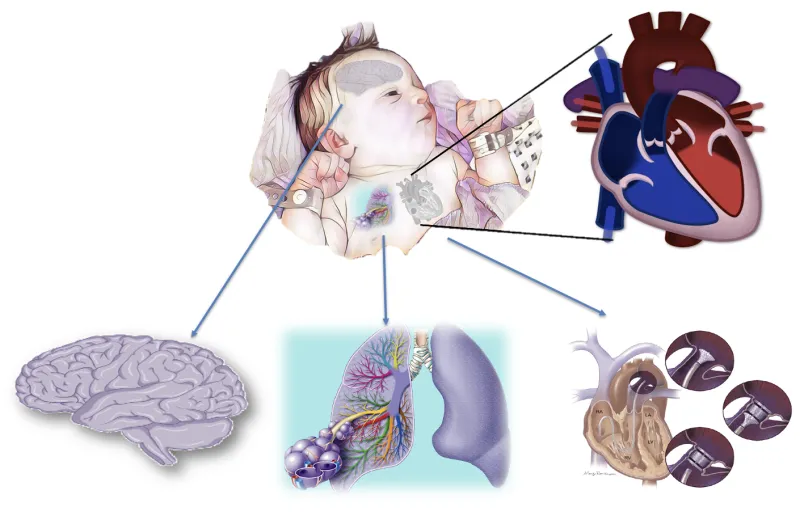
Illustration of a baby showing enlarged views of the brain, lungs, and heart
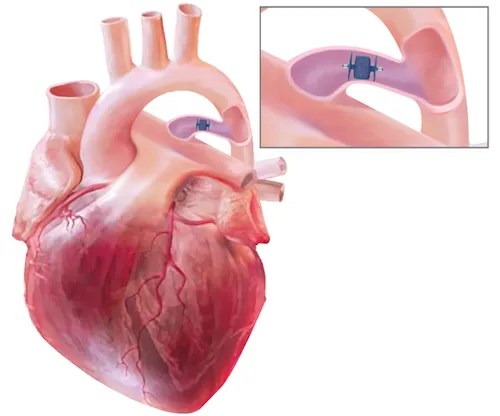
A heart with an enlarged view of medical device inside an artery

Heart disease

Acquired heart disease

In 2019, the Food and Drug Administration approved a new transcatheter device to close PDAs in extremely-low birth weight newborns, making it possible for many more patients to benefit from this minimally invasive procedure. We established a Premature PDA Closure Program at Boston Children's Hospital to support neonates eligible for transcatheter device closure of the PDA, and we manage a consultation service for the New England region (16 referral centers) that facilitates transfer, care, and follow up for all babies who come to Boston Children's Hospital for device closure. The program has its own database, and its impact serves as resources for comparative reports and quality improvement initiatives; our data from over 300 consultations, 185 closures, original clinical manuscripts, and reviews has fueled two randomized control trials: (1) Percutaneous Intervention Versus Observational Trial of Arterial Ductus in Low weight Infants (PIVOTAL, NCT05547165);and (2) Milrinone for Prevention of Post-ligation Cardiac Syndrome Trial (MIDAS, NCT06679855).

The impact of definitive closure on cardiopulmonary mechanics and options to minimize the short- and long- term impact is also limited. Furthermore, decisions regarding optimal timing for device occlusion and their hemodynamic impact to minimize consequences of a persistent ductus arteriosus remain to be fully elucidated. Our group is partnering with regional and national organization with a focus on addressing crucial gaps to enable widespread use of algorithms and rigorously inform clinical decision-making, with the ultimate goal of improving neonatal outcomes in preterm infants with a hsPDA.
Congenital heart disease

Congenital heart disease (CHD) and prematurity are the two leading causes of death within the first year of age in the United States. CHD affects ~ 1% of births per year in the US. Premature infants have up to a 20-fold higher risk of CHD. Our lab designed and implemented the first multi-center combined neonatal and cardiac database that collects comprehensive prenatal and perinatal data necessary to understand the environmental and developmental risk factors for preoperative mortality among premature neonates with CHD. This registry will have long standing impact to help lowering morbidity and mortality. In addition, our current research has quantified the excess morbidity and mortality, but we have a limited understanding of the underlying risk factors Our research group is exploring modifiable maternal, prenatal, and perinatal clinical factors that contribute to mortality and increased length of stay among premature infants with congenital heart disease.

Lung-Heart coupling

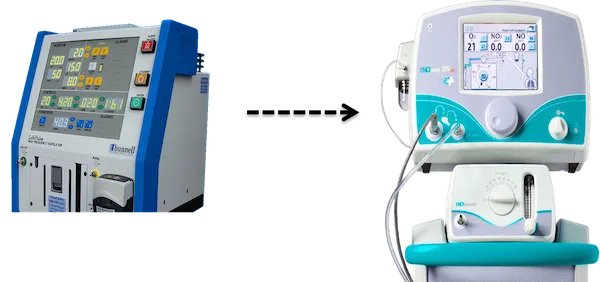
Two medical monitor machines

Following PDA closure, many neonates have improved lung compliance, but temporal derangements in cardiopulmonary status with alterations in loading conditions occur in a subset of preterm infants who undergo definitive closure. Our research group is studying the respiratory phenotypes and risk factors associated with cardiopulmonary changes following definitive closure of the PDA in preterm infants, commonly referred to as post-cardiopulmonary closure syndrome. In addition, we are investigation respiratory prediction modeling in term and preterm infants on high-frequency ventilation. We are also focused on validating and implementing electrical impedance tomography, a novel non-invasive tool to assess lung ventilation and perfusion in infants and children with CDH, BPD, pulmonary hypertension, and pulmonary vein stenosis.

Brain-Heart interactions

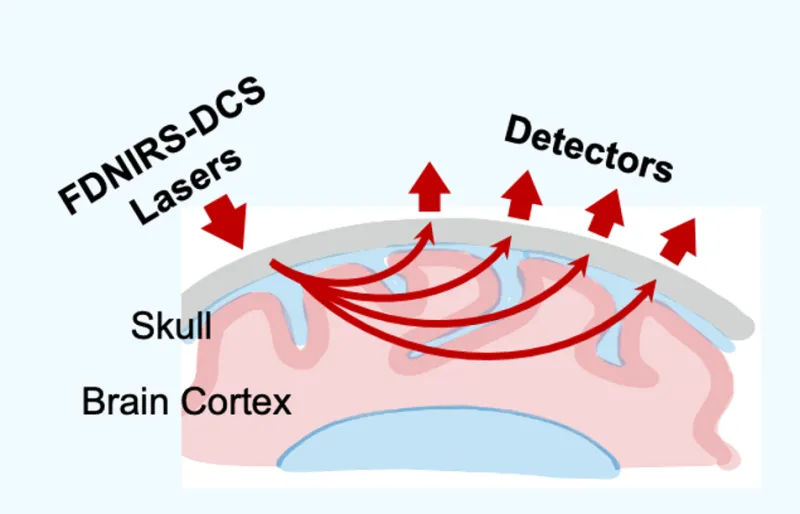
Illustration of the brain cortex and skull while FDNIRS-DCS Lasers go through the skull and back out to to the detectors

We are studying the feasibility of monitoring cerebral blood flow with frequency-domain near-infrared spectroscopy and diffuse correlation spectroscopies during transcatheter device closure of the patent ductus arteriosus. We are partnering with members of the Fetal-Neonatal Neuroimaging and Developmental Science Center (FNNDSC) at Boston Children’s Hospital.