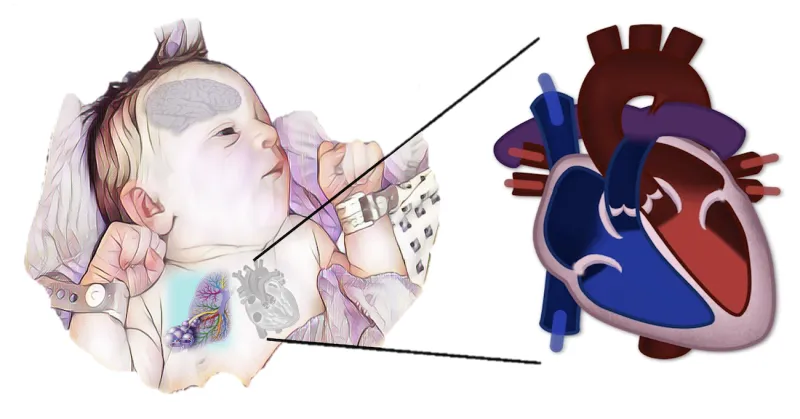
A baby lying down with a enlarged illustration of its heart showing the different chambers and valves

The SmallWonders Neonatal Cardiovascular Research Group leverages real-time hemodynamic and cardiopulmonary data to advance precision care for critically ill newborns with acquired or congenital heart disease. Neonatal cardiovascular care focuses on the evaluation, monitoring, and management of blood flow and circulation during the neonatal period, emphasizing the dynamic interactions among the heart, blood vessels, and lungs to ensure adequate oxygen and nutrient delivery. Within this field, neonatal hemodynamics represents a specialized, physiology-based discipline centered on individualized, integrative approaches to the assessment and management of cardiovascular disorders in critically ill neonates. 
Our mission

The group’s mission is to develop, validate, and implement innovative strategies to improve the diagnosis and treatment of infants at risk for cardiovascular disease through local, regional, national and international collaborations exploring noninvasive measures of cardiac and pulmonary function and postnatal cardiovascular adaptation. Research spans three core domains—congenital and acquired heart disease, lung–heart coupling, and brain–heart interactions—and includes conditions such as patent ductus arteriosus, acute and chronic pulmonary hypertension, bronchopulmonary dysplasia, pulmonary vein stenosis, congenital diaphragmatic hernia, and congenital heart disease, with a particular emphasis on preterm infants. This work is conducted through a physiologic, interdisciplinary framework integrating cardiology, respiratory therapy, newborn medicine, surgery, and neurodevelopmental sciences.

Please note

This content is best viewed in a browser other than Safari

Heart disease

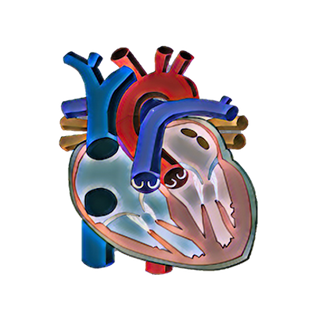
Examines the hemodynamic impact of patent ductus arteriosus and its associated intevrentions in premature infants and evaluates cardiovascular physiology and neonatal outcomes in preterm infants with congenital heart disease.

Lung-Heart coupling

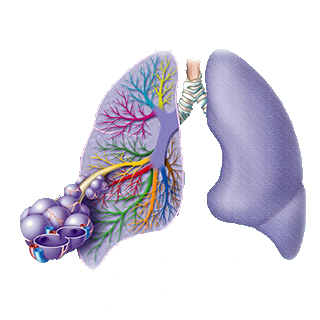
Research focuses on respiratory prediction modeling in premature infants on high-frequency ventilation, phenotyping respiratory responses to management of hemodynamically significant PDA, and validation of electrical impedance tomography in children with CDH, BPD, pulmonary hypertension, and pulmonary vein stenosis.

Brain-Heart interactions

Exploring the feasibility of  monitoring cerebral blood flow with frequency-domain near-infrared spectroscopy and diffuse correlation spectroscopies during transcatheter device closure of the patent ductus arteriosus