Meet Our Team! | |
|---|---|
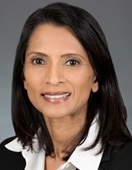 | Dr. Steen is a Professor of Neurobiology at Harvard Medical School, a member of the Harvard Stem Cell Institute and the Director of the Neuroproteomics Laboratory in the F. M. Kirby Neuroscience Center at Boston Children’s Hospital. Her laboratory works to understand neuro-regeneration and neurodegenerative diseases using systems biology approaches. The laboratory develops novel qualitative and quantitative methodologies at the interface of proteomics and transcriptomics with special emphasis on computational proteomics approaches. These novel quantitative methods and bioinformatics tools developed by the Steen Laboratory are being applied to understand the biology of regeneration and neurodegeneration in both mouse models, stem cells and human tissues, to find molecular targets for therapeutics, and to identify biomarkers of the neurodegenerative process. Further functional studies using biochemical, molecular and cell biology approaches are used to verify and understand the role of the targets and biomarkers in the context of injury and disease. The goal of this research is to use molecular information provided by our quantitative proteomics measurements in order to ameliorate neurodegeneration and promote regeneration.is an Associate Professor of Neurobiology at Harvard Medical School, a member of the Harvard Stem Cell Institute and the Director of the Neuroproteomics Laboratory in the F. M. Kirby Neuroscience Center at Boston Children’s Hospital. Her laboratory works to understand neuro-regeneration and neurodegenerative diseases using systems biology approaches. The laboratory develops novel qualitative and quantitative methodologies at the interface of proteomics and transcriptomics with special emphasis on computational proteomics approaches. These novel quantitative methods and bioinformatics tools developed by the Steen Laboratory are being applied to understand the biology of regeneration and neurodegeneration in both mouse models, stem cells and human tissues, to find molecular targets for therapeutics, and to identify biomarkers of the neurodegenerative process. Further functional studies using biochemical, molecular and cell biology approaches are used to verify and understand the role of the targets and biomarkers in the context of injury and disease. The goal of this research is to use molecular information provided by our quantitative proteomics measurements in order to ameliorate neurodegeneration and promote regeneration. |
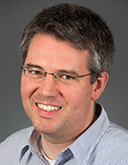 | Dr. Steen is a Professor of Pathology at Harvard Medical School, whose laboratory is located at Boston Children’s Hospital. Dr. Steen’s group research has three focal areas: i) The discovery of urinary biomarkers for diagnostic purposes in a wide range of acute and chronic diseases including appendicitis, Kawasaki disease, TB, traumatic brain injury, and Crohn’s Diseases. To this end the Steen Lab has developed a urine proteomics platform which allows for the fast and efficient processing and proteomic analysis of urine specimens. ii) Use of proteomics to study post-translational mechanisms of protein regulation, with particular emphasis on protein degradation in mitosis and development. The Steen group developed the concept of co-regulation proteomics algorithms that correlates protein abundance traces specific enzyme activities and functions. This work resulted in the identification of kinens, as a new class of cell cycle dependent substrates of the Anaphase Promoting Complex. iii) Method development to improve a) processing of proteomic samples, b) accuracy and precision of protein quantification and iii) computational methods for the qualitative and quantitative analysis of proteomic data. For instance, the FLEXIQuant approach developed by the Steen Lab, which allows for the exquisitely detailed characterization of selected proteins and their post-translational modification, has been instrumental for studying multikinase mechanisms (Nat Methods. 2012;9:504), and the post-translational regulation of Tiki1 in Xenopus development (Cell. 2012;149:1565) and kinesin C1 during mitosis (EMBO J. 2014;33:385). |
Image
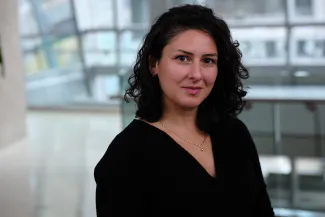
| Ceren Uncu, BA | Email Ceren is from Antalya, Turkey. She joined the Steen Lab after graduating from Istanbul University in 2011. As the CLS Lab’s manager, she keeps the Judith Steen Lab running smoothly, ensuring the team has the resources, guidance, and support they need to do their best work. She oversees budgets, equipment, and collaborations, manages Material Transfer Agreements, Safety and Regulatory Protocols and coordinates onboarding and training for new lab members. She also serves as the Chair of the Hospital’s Laboratory Safety Group, helping maintain a safe and productive environment for all Boston Children's Hospital researchers. Outside of the lab, Ceren can be found chasing her two little kids at playgrounds, going on family adventures, or practicing yoga at various studios around Boston. |
Image
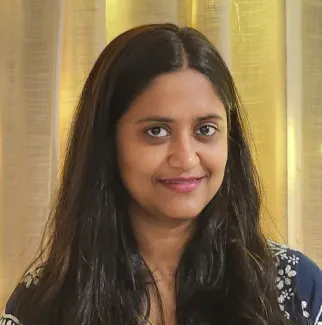
| Meenakshi Jha, MSc | Email Meenakshi Jha is a Lab manager in the Steen lab. She studied Biotechnology(M.Sc.) from Bangalore University, India. After her post-graduation, she worked for the firm Ernst & Young in Bangalore. Her interest in science made her switch her career to Science and she eventually got an opportunity to join Steen lab in May 2018. Besides managing the lab, she also manages thousands of samples for various projects. She loves music, singing is her favorite pastime. She loves traveling and exploring new places around the world. |
Image
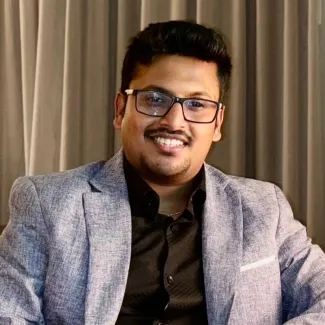
| Deeptarup Biswas, PhD | Email Deeptarup Biswas specializes in Single-Cell Omics, Artificial Intelligence and Machine Learning, Neuroscience, and Biomarker Discovery. He completed his Ph.D. at the Indian Institute of Technology Bombay (IITB), where he developed robust big data analysis pipelines to investigate the pathophysiology and therapeutic mechanisms of high-grade meningioma tumors. Currently, his research lies at the intersection of mass spectrometry-based proteomics, big data analytics, and neurodegenerative disease biology, aiming to unravel molecular mechanisms and disease-associated proteomic profiles. He has developed several databases, automated tools, and computational pipelines, including BrainProt, AlphaCross-XL, CovProt, and BDMC - contributing to advancements in omics-driven and translational clinical research. |
Image
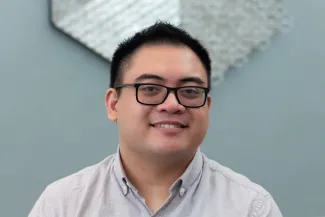
| Dylan Tabang, PhD | Email Dylan is a post-doctoral research fellow who joined the group of Prof. Hanno Steen in the Department of Pathology in 2023. He did his Bachelor of Science degree in Chemistry at the University of Illinois at Chicago followed by a Doctor of Philosophy degree in Chemistry at the University of Wisconsin-Madison. His graduate work focused on developing the multiomic mass spectrometry toolbox for analysis of pancreatic diseases, with a focus on protein post-translational modifications. Dylan's current interests in the Steen^2 lab include developing new, high throughput-methods for deepening proteomic coverage from body fluids and performing biomarker discovery in pancreatic (and other pediatric) disease research. Dylan's hobbies outside of lab include cooking, cultural sightseeing, and reading. |
Image
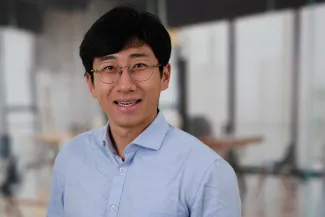
| Tian Wang, PhD | Email Tian Wang is from Changchun, China. He graduated with a B.Sc. on chemical biology in 2017 and a Ph.D. on biology in 2022 (with Prof. Lei Liu) both at Tsinghua University (China). During his Ph.D. program, Tian was focusing on developing new strategies to chemically synthesize biochemical protein tools for studying ubiquitin-associated proteins in cells by proteomic methods, as well as the structural insights into ubiquitination enzymes by biophysical methods. With the increasing interest in mass spectrum, he joined the Steen Lab as a postdoctoral fellow in 2022. He is working on the pathogenesis role played by Tau in multiple tauopathies. In his spare time, Tian loves to work out at gym, paddle on the dragon boat, and watch BiliBili! |
Image
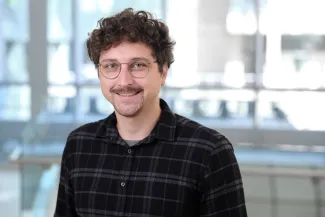
| Georg Jocher, PhD | Email Georg completed his Ph.D. at the Technical University of Munich in 2024 as a graduate scholar of the International Max Planck Research School for Molecular Life Sciences. During his doctoral training in Stefan Lichtenthaler’s lab, he focused on regulated intramembrane proteolysis, where he developed and applied mass spectrometry–based proteomics methods for secretome analysis. His work led to the discovery of a novel entry route for SARS-CoV-2 and provided mechanistic insights into inflammatory signaling pathways involving a microglial Alzheimer’s disease risk factor. |
Image
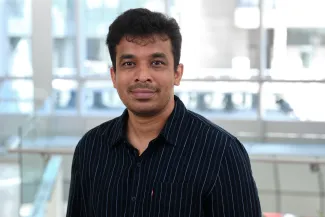
| Joel Christie, PhD | Email Joel Christie, PhD is a postdoctoral researcher in the Steen Lab. He completed his PhD in Life Sciences at Homi Bhabha National Institute, Mumbai, where his research focused on proteostasis regulation using quantitative mass spectrometry-based proteomics. His doctoral work centered on understanding how proteasomal assembly chaperones shape protein interaction networks and maintain cellular homeostasis. In the Steen Lab, Joel studies neurodegenerative disease mechanisms using advanced mass spectrometry-based and spatial proteomics approaches. His research aims to resolve region- and cell-type-specific proteostasis alterations in the nervous system, with a focus on how dysregulated protein networks contribute to neurodegeneration. |
Image
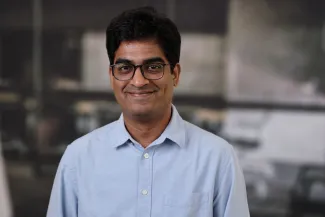
| Saicharan Ghantasala, PhD | Email Saicharan brings in his decade long expertise in mass spectrometry method development and targeted proteomics-based quantification assays. He received his PhD from the Indian Institute of Technology Bombay (IITB) where he focused on Elucidating the heterogeneity of Glioblastomas using proteomics approaches. He was instrumental in developing robust proteomics platforms using discovery and targeted mass spectrometric methods aimed at identifying and quantifying proteins. His work in the Steen lab includes currently involves developing FLEXIQuant methods for identifying and quantifying proteoforms in neurodegenerative disorders like Alzheimer's and Parkinson's disease. Sai is a trained classical singer (Indian - Carnatic music) and music holds a special place in his heart and life! He is also a Formula One (F1) enthusiast and likes to keep himself updated with advancements in technology all around. |
Image
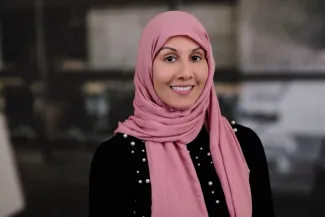
| Saima Ahmed, PhD | Email Saima is currently a Postdoctoral Research Fellow in the Steen Lab. She joined Dr. Hanno Steen’s lab in 2008 and later completed her PhD from the Technische Universität Berlin (TU Berlin) under his mentorship focusing on proteomics-based biomarker discovery. Since then, she has contributed to 19 scientific publications, including four first-author papers and a textbook chapter. One of her studies was featured on the cover of the Journal of NeuroVirology, and she has submitted two U.S. patent applications. She has received several awards, including finalist for the HMS Pathology Research Celebration and first prize for Poster of Distinction at the HMS Pathology Retreat. Her research focuses on developing non-invasive biomarker assays using body fluids such as urine to predict and diagnose diseases in premature neonates in the NICU. |
Image
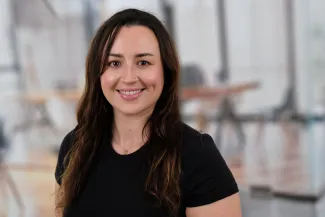
| Sinead Greally, PhD | Email Sinead Greally is a Postdoctoral Research Fellow in the Steen Laboratory at Boston Children’s Hospital and Harvard Medical School. Originally from Ireland, she earned her BSc in Biomedical Science from the National University of Ireland, Galway, and an MSc in Drug Development and NeuroHealth from Maastricht University in the Netherlands. She completed her PhD as an external student at Maastricht University, conducting her research in the Steen Lab, where she investigated the proteomic and molecular features of α-synuclein pathology in Parkinson’s disease, Dementia with Lewy Bodies, and Multiple System Atrophy. In her postdoctoral research, Sinead continues to characterize α-synuclein proteoforms across synucleinopathies, expand global proteomic analyses in PD, DLB, and MSA, and investigate biomarkers associated with GBA-linked Parkinson’s disease. Outside the lab, she enjoys exploring Boston, traveling, and spending time with friends. |
Image
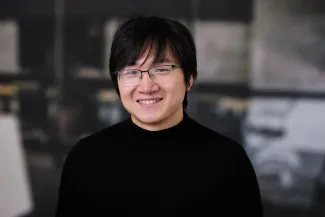
| Liquan Liu, MD | Email Liquan Liu is a postdoctoral fellow at the Steen Lab with a passion for bridging clinical medicine and cutting-edge mass spectrometry research. He earned my M.D. from Huazhong University of Science and Technology, specializing in oncology and clinical medicine. Currently, he focuses on single-cell and spatial proteomics applied to neurodegenerative diseases, working across the entire research pipeline—from sample preparation to data analysis and clinical translation. What excites Liquan most is the potential to translate our proteomics findings into meaningful clinical impact through precision medicine. Beyond the lab, you might find Liquan reading, watching movies, or out on the water with his dragon boat team! He is always eager to collaborate and learn from others in the proteomics community! |
Image
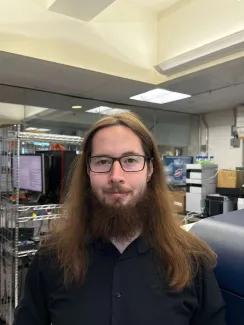
| Oliver Lindshort, MSc | Email Oliver Lindhorst studied biochemistry at the University of Glasgow in Scotland, staying to pursue a Master’s in immunology and inflammatory diseases. He completed his Master’s thesis in the Steen laboratory, and has since rejoined to start his graduate studies in June of 2024. Under the supervision of Dr. Hanno Steen, Olivers’ research focuses on the development of high-throughput, sample sparing plasma proteomic techniques for application in the study of large cohorts including the Immunophenotyping Assessment in a COVID-19 (IMPACC) and Immune Development in Early Life (IDEAL) projects. |
Image
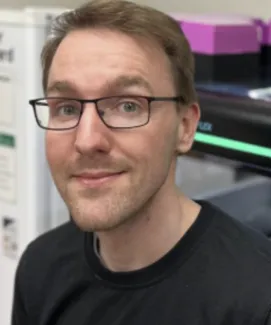
| Oliver Schott, MSc | Email Oliver earned his master's degree in bioanalytical chemistry from the University of Aalen, Germany, specializing in mass spectrometry and statistics. During his graduate studies in the Steen lab, Oliver develops mass spectrometry-based high-throughput proteomic platforms for analyzing Dried Blood Spots (DBS). His work covers various fields such as Chemistry, Biology, Statistics, (Bio-)Informatics, along with hardware development and lab automation. |
Image
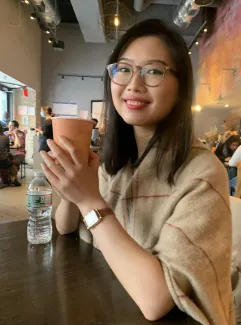
| Jie Xue, MSc | Email Jie Xue is from Zhengzhou, China. Jie gained her bachelor’s degree in Pharmaceutical Sciences in Wuhan University and continued devoting herself in the pharmaceutical department in Northeastern University for a master’s degree. Her enthusiasm in neurodegenerative disorders and mass spectrometry led her to the Steen Lab as a research assistant in late 2019. Jie is specializing on the initiation and propagation of Alzheimer's Disease, as well as neuroinflammation. She endeavors to gain the expertise in the field, and now she is pursuing her doctorate degree! She enjoys long walks in Boston; tango and swing dance at weekends for mental and physical refreshment; and playing with dogs! Jie is also interested in different cultures and loves all types of dumplings and mochi. |
Image
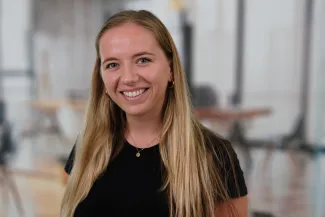
| Maaike Beuvnik, MSc | Email Maaike Beuvink completed her bachelor’s degree in Bio-Pharmaceutical Sciences at Leiden University. Driven by her interest in neuroscience and the molecular mechanisms underlying brain disorders, she pursued a research master’s in Drug Development and Neurohealth at Maastricht University. During her master’s program, Maaike joined the Steen Lab for her internship, where she developed a strong interest in mass spectrometry–based proteomics. In 2022, she returned to the Steen Lab as a PhD student, focusing on applying mass spectrometry to characterize proteins involved in tauopathies, with a particular emphasis on Tau in Progressive Supranuclear Palsy (PSP). Outside the lab, Maaike enjoys traveling, trying new sports, and spending time with friends. |
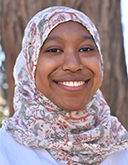 | Zainab Wurie, BA | Email Zainab joined the Steen Lab in February 2017 as an undergraduate researcher, where she worked on optimization of human cerebrospinal fluid peptidomics methods and mass spectral analysis for her senior thesis. She graduated with a B.A. in Neurobiology from Harvard University in 2018. She loved the lab so much that she decided to join full-time. As a research assistant, she is working under Dylan Tabang, PhD and performing high-throughput body fluid sample processing for proteomic/mass spectral analysis, as well as proteomics/peptidomics method optimization. Outside of lab, she loves taking long walks, gardening, and spending time with friends and family. |
Image
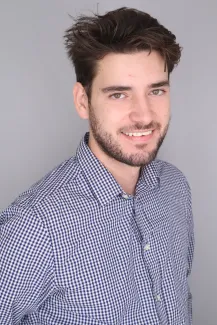
| Jason Saturno, BSc | Email Jason Saturno earned his B.Sc from Wentworth Institute of Technology. He joined the Steen Lab in September of 2021 as an intern while continuing his education. In the Steen Lab Jason wears many hats managing the computer systems, conducting downstream analysis of data, and a variety of wet lab work. Jason also collaborates with Dr. Reena Ghosh of the del Nido Lab focusing on cardiology. He is currently in the process of applying to medical school. |
Image
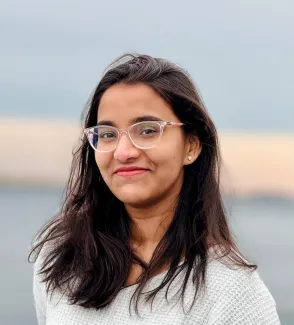
| Raaga Yarrabadi, MSc | Email Raagasahithi Yarrabadi is a research trainee in the Steen Lab and a recent Health Informatics graduate from Northeastern University. She brings a multidisciplinary foundation in dental sciences, Biosciences, Biotechnology, and biomedical research. At the lab, she develops user-friendly, scalable tools and backend systems using Django REST Framework and PostgreSQL- to make high-volume omics and phenotypic data more accessible and easier to work with researchers. Her focus is on creating practical, lab-ready solutions, including normalized data models, efficient CSV ingestion scripts via Django ORM, and secure RESTful APIs that support smooth data access, provenance tracking, and interoperability. With prior hands-on experience in molecular biology techniques, microbiology, histopathology, and clinical health data management (EHR systems and HIPAA compliance), her interests lie in building effective biomedical data infrastructure, clinical research informatics, and translational applications for neurodegenerative diseases and other Pathologies. In her free time, Raaga loves to paint, cook new recipes, and travel to explore different places. |
Image
| Annie Wiedmer, MSc | Email Anne Wiedmer is a visiting PhD student from KU Leuven in Belgium, supervised by Prof. Dietmar Thal, and is currently completing a research stay in the Steen Laboratory as part of her doctoral training. Originally from the United States, she completed her Master’s degree in Neuroscience at the University of Zurich, where her research focused on glioblastoma in a neuro-oncology laboratory. Her PhD research focuses on investigating the impact of TDP-43 co-pathology on the Alzheimer’s disease proteome using mass spectrometry–based approaches applied to human post-mortem brain tissue. |