The investigational therapy we are proposing to test is a gas that can be breathed in through the lungs called hydrogen gas. Hydrogen gas is the lightest and most abundant molecule in the universe. It doesn’t have a smell or a color if you are around it. You may have heard of hydrogen as an environmentally-friendly source of fuels. In fact, there are tiny amounts of hydrogen in the air we breathe too. Hydrogen has been consumed as hydrogen water or tablets.
Why are we doing this research study?
HIE is a life-threatening medical emergency in which blood flow and oxygen delivery to the baby is severely limited. Damage to the brain, lungs, heart kidneys, and other organs can occur. Despite our best current therapies, including hypothermia, many babies do not survive or have long term developmental delays.
What is HIE?
HIE stands for Hypoxic-Ischemic Encephalopathy. HIE is caused by reduction in oxygen-rich blood delivery to the brain around the time of birth (the perinatal period). This can be caused by a variety of factors, including complications with the placenta or umbilical cord, among others. The reduction in oxygen and blood flow delivery to the baby leads to organ dysfunction and potential brain injury. When babies with HIE are born, they often need help with breathing and heart function and are admitted to a newborn intensive care unit (NICU).
The standard treatment for HIE is therapeutic hypothermia – cooling the body temperature down for three days after birth. During this time, brain electrical activity is also monitored, as babies with HIE are at risk for seizures. We also support organ function, often providing assistance with breathing and heart function, while monitoring possible injury to kidneys and the liver. After completion of hypothermia, babies typically undergo imaging of their brain (a MRI) to understand any injury that might have occurred.
Even with the best treatments today, many babies with moderate or severe HIE (40-50%) die or have significant long term developmental effects. This is why we are trying to develop new treatments to better protect the newborn brain.
What is hydrogen gas and why are we studying it?
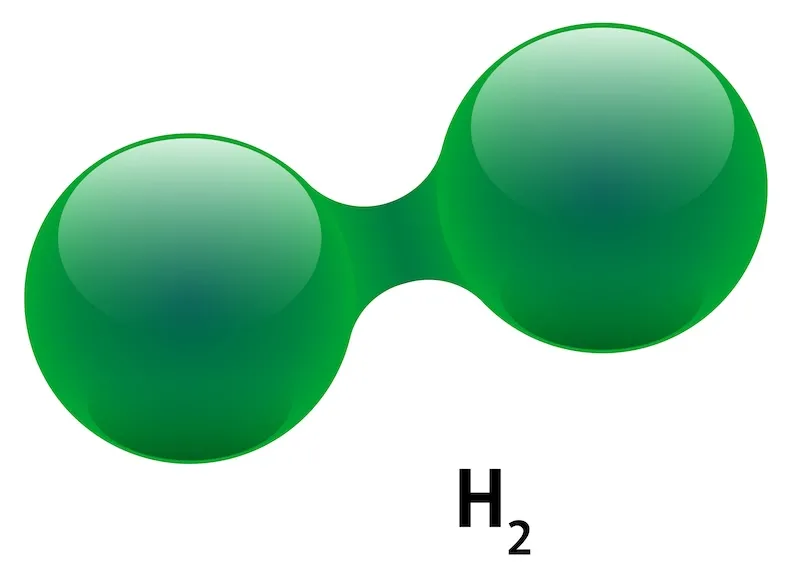
The structure of hydrogen is very simple – it’s just two hydrogen atoms, each one made up of a single proton, neutron and electron, covalently bonded together. And the name hydrogen tells us something very important about it – hydro means water, and gen means generating. From the very first experiences with hydrogen its reactivity with oxygen to form water has been recognized.
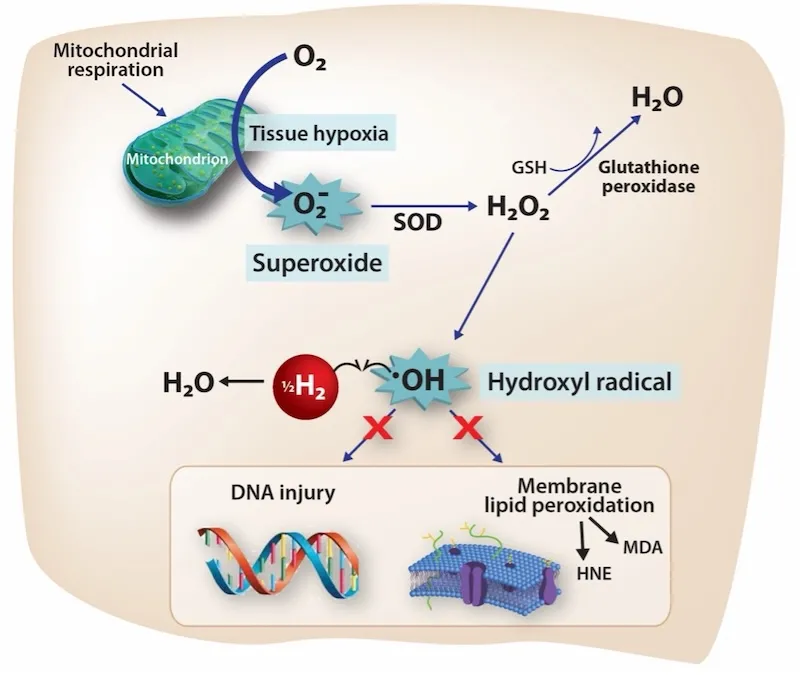
Fortunately, hydrogen’s reactivity with oxygen is actually critical to its action. Here’s why. When the heart or lungs fail in their job – as happens in a cardiac arrest – cells begin to use oxygen in a toxic way. Specifically, modified oxygen species – like superoxide, peroxide, and hydroxyl radical are generated. These oxygen species are highly reactive and directly damage critical components of cells, like DNA and the lipid membranes that coat our cells. These actions directly cause cell death. When hydrogen is present in the blood, a landmark research study found that hydrogen effectively behaves as a sponge, absorbing these toxic species and decreasing the damage that occurs from a lack of oxygen.
Hydrogen may be able to help
Graphic of what occurs after ischemia-reperfusion injury. Cells generate reactive oxygen species and hydrogen acts as a sponge to soak up these reactive oxygen species to form water, preventing them from causing cellular damage.
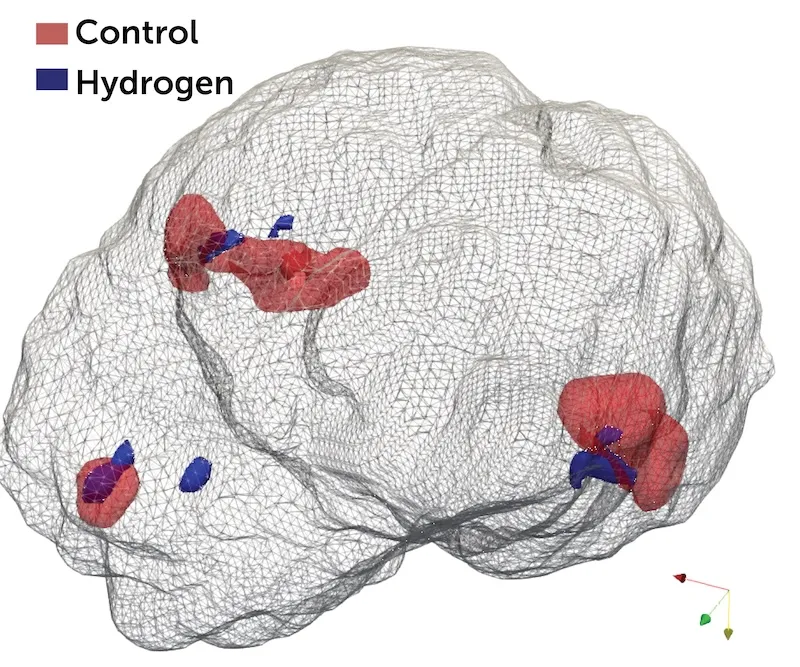
Many studies have been performed demonstrating that when hydrogen is given to during an injury like cardiac arrest, the damage is much less. Boston Children’s is a leading research center for hydrogen as a therapy in the United States, and has extensive experience with hydrogen use.
For example, this paper showed that when hydrogen was given to animals experiencing an injury similar to the ones in this trial, brain damage decreased from the area shown in red (controls) to that shown in blue due to treatment with hydrogen. In this research study, hydrogen was given in the same ways that we will give it in this research study – through the ventilator and ECMO membrane.
In another research study at Boston Children’s Hospital, we showed in this paper that administering hydrogen at the dose that we will use in this research study is safe and well tolerated in healthy adults.
A recent research study from Japan demonstrated that the administration of hydrogen in adults following a cardiac arrest was safe, improved survival, and improved neurologic outcomes in patients who survived.
Patients cannot be treated with hydrogen unless they are enrolled in this trial.
What is Exception From Informed Consent (EFIC)?
The U.S. Food and Drug Administration (FDA) is an agency of the federal government that oversees human research protection involving medicines. The FDA has created a set of special rules, called “Exception From Informed Consent” (EFIC), for clinical research trials that apply to critically ill patients who require emergent therapy when prospective informed consent is not possible or may put the patient at risk for increased harm by delaying potentially life-saving therapies. Under some circumstances, there may not be time to seek prospective informed consent from every eligible patient and, in some cases, discussing a possible option to enroll in a research study may itself cause dangerous delays in a person’s care. Nonetheless, many critically ill patients could benefit from enrollment into an appropriate clinical research trial. Therefore, to ensure that clinical research trials can be conducted for patients in emergency situations, the FDA established rules for EFIC that require special safeguards to ensure that most people would consider the research study to be ethical and appropriate. These special rules allow research studies in certain emergency situations to be conducted without prospective informed consent.
EFIC can only be used when the person’s life is at risk, the best treatment is not known, the research study might help the person, it is not possible to get permission from the person because of his or her medical condition nor from the person’s guardian because there is a very short amount of time required to treat the medical problem. Before researchers can start a research study using EFIC, they must provide information about the research study to the community and get their feedback.
In preparation for this research trial, we will complete a rigorous process of discussing this research study with providers and also a group of parents of patients with HIE.