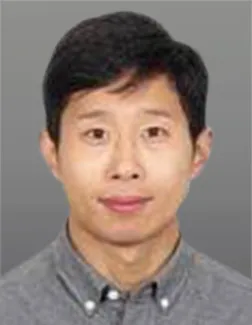
Our lab is broadly interested in developing novel MRI data acquisition and image reconstruction methods that enable robust imaging in the presence of motion and other real-world constraints. We focus on integrating advanced non-Cartesian sampling strategies, physics-informed modeling, and data-efficient machine learning to improve image quality and quantitative accuracy.
In particular, our research emphasizes the development of motion-robust techniques for quantitative fetal and neonatal brain imaging, where patient motion and physiological variability pose significant challenges. We also apply these methods to cardiovascular MRI, aiming to enable reliable imaging of dynamic structures under free-breathing and non-ideal conditions. Through close collaboration with clinicians, our goal is to translate these technical advances into practical tools that can be used routinely in clinical care.
Research Background
Xiaoqing Wang is an Assistant Professor of Radiology at Harvard Medical School and a Scientist at the Computational Radiology Laboratory (CRL) at the department of Radiology, Boston Children’s Hospital. He earned his doctorate degree (Dr. rer. nat) in Medical Physics from the Max Planck Institute and the University of Göttingen, Germany (PhD Supervisor: Prof. Dr. Jens Frahm). Prior to his position at CRL, he was a research fellow at the Athinoula A. Martinos Center for Biomedical Imaging, Massachusetts General Hospital, under the supervision of Prof. Berkin Bilgic. Previously, he also worked as a research scientist at the University Medical Center Göttingen under the guidance of Prof. Martin Uecker. Dr. Wang’s research focuses on motion-robust pulse sequence design, quantitative MRI, model-based image reconstruction, and their practical applications in fetal and pediatric MRI.
Publications
Combining Prospective and Retrospective Motion Correction, Using the Scout Accelerated Motion Estimation and Reduction (SAMER) Framework, for Rapid and Motion-Robust 2D TSE Imaging. Magn Reson Med. 2026 Jul 28. View Abstract
Simultaneous T2, T2*, and R2' Mapping for Multiple Sclerosis Using Nonlinear Model-Based Reconstruction of Undersampled Radial RARE-EPI MRI. Magn Reson Med. 2026 Oct; 96(4):1872-1892. View Abstract
Effect of a consistent reconstruction algorithm on inter-scanner reproducibility in diffusion MRI. Med Phys. 2025 Nov; 52(11):e70096. View Abstract
Generative priors for MRI reconstruction trained from magnitude-only images using phase augmentation. Philos Trans A Math Phys Eng Sci. 2025 Jun 19; 383(2299):20240323. View Abstract
Rapid, high-resolution and distortion-free R2* mapping of fetal brain using multi-echo radial FLASH and model-based reconstruction. Magn Reson Med. 2025 Nov; 94(5):1913-1929. View Abstract
Rapid, High-resolution and Distortion-free R2* Mapping of Fetal Brain using Multi-echo Radial FLASH and Model-based Reconstruction. ArXiv. 2025 May 27. View Abstract
Self-supervised learning for improved calibrationless radial MRI with NLINV-Net. Magn Reson Med. 2024 12; 92(6):2447-2463. View Abstract
Zero-DeepSub: Zero-shot deep subspace reconstruction for rapid multiparametric quantitative MRI using 3D-QALAS. Magn Reson Med. 2024 06; 91(6):2459-2482. View Abstract
SSL-QALAS: Self-Supervised Learning for rapid multiparameter estimation in quantitative MRI using 3D-QALAS. Magn Reson Med. 2023 11; 90(5):2019-2032. View Abstract
Free-Breathing Liver Fat, R2* and B0 Field Mapping Using Multi-Echo Radial FLASH and Regularized Model-Based Reconstruction. IEEE Trans Med Imaging. 2023 05; 42(5):1374-1387. View Abstract
Quantitative MRI by nonlinear inversion of the Bloch equations. Magn Reson Med. 2023 08; 90(2):520-538. View Abstract
Free-breathing myocardial T1 mapping using inversion-recovery radial FLASH and motion-resolved model-based reconstruction. Magn Reson Med. 2023 04; 89(4):1368-1384. View Abstract
Physics-based reconstruction methods for magnetic resonance imaging. Philos Trans A Math Phys Eng Sci. 2021 Jun 28; 379(2200):20200196. View Abstract
Model-based reconstruction for simultaneous multi-slice T1 mapping using single-shot inversion-recovery radial FLASH. Magn Reson Med. 2021 03; 85(3):1258-1271. View Abstract
Real-time cardiovascular magnetic resonance T1 and extracellular volume fraction mapping for tissue characterisation in aortic stenosis. J Cardiovasc Magn Reson. 2020 06 22; 22(1):46. View Abstract
Model-based myocardial T1 mapping with sparsity constraints using single-shot inversion-recovery radial FLASH cardiovascular magnetic resonance. J Cardiovasc Magn Reson. 2019 09 19; 21(1):60. View Abstract
Magnetic resonance imaging of brain cell water. Sci Rep. 2019 03 25; 9(1):5084. View Abstract
Magnetic resonance imaging of noradrenergic neurons. Brain Struct Funct. 2019 May; 224(4):1609-1625. View Abstract
Model-based T1 mapping with sparsity constraints using single-shot inversion-recovery radial FLASH. Magn Reson Med. 2018 02; 79(2):730-740. View Abstract
High-resolution myocardial T1 mapping using single-shot inversion recovery fast low-angle shot MRI with radial undersampling and iterative reconstruction. Br J Radiol. 2016 Dec; 89(1068):20160255. View Abstract