Image
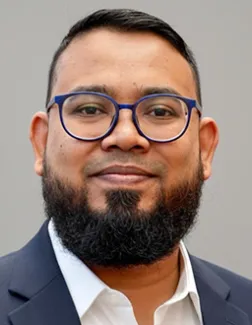
Mohammad Arafat Hussain
PhD
Scientist, Division of Newborn Medicine
Instructor, Harvard Medical School
Dr. Mohammad Hussain is an AI and medical imaging researcher whose work focuses on developing advanced machine learning and deep learning methods to improve disease characterization, prognosis, and individualized outcome prediction. His research integrates multimodal neuroimaging, clinical, and genomic data to better understand brain development and neurocognitive outcomes, particularly in children and adults with congenital heart disease (CHD). Over the course of his career, he has developed innovative AI approaches for medical image analysis, including segmentation-free organ volume estimation, cancer grading and staging, radiogenomic prediction, active learning for medical imaging, and neurocognitive outcome modeling.
At Boston Children’s Hospital and Harvard Medical School, Dr. Hussain leads research aimed at predicting long-term neurodevelopmental and cognitive outcomes using multimodal data collected across the lifespan. His current work combines structural and functional brain MRI, clinical information, and genomic features to develop explainable and clinically meaningful AI models that support precision medicine. A central goal of his research program is to bridge artificial intelligence, neuroimaging, and translational medicine to enable earlier identification of individuals at risk for adverse neurodevelopmental outcomes and to facilitate personalized interventions that improve lifelong health and cognitive trajectories.
Dr. Mohammad Hussain is an Instructor in Pediatrics at Boston Children’s Hospital and Harvard Medical School. He received his Ph.D. and M.Sc. degrees in Biomedical Engineering from the University of British Columbia, Canada, following B.Sc. and M.Sc. degrees in Electrical and Electronic Engineering from Bangladesh University of Engineering and Technology (BUET). He completed postdoctoral training at Simon Fraser University and Boston Children’s Hospital, specializing in artificial intelligence, machine learning, and medical image analysis.
Dr. Hussain’s research spans artificial intelligence, neuroimaging, medical image computing, and precision medicine. He has authored more than 25 peer-reviewed publications, with the majority as first author. He has served as Principal Investigator on multiple competitively funded projects, including fellowships from the American Heart Association and NHLBI-supported programs. His contributions include the development of AI methods for cancer characterization, organ analysis, active learning, and neurocognitive outcome prediction. His work has been recognized through international awards, including honors from the Medical Image Computing and Computer Assisted Intervention (MICCAI) community and Boston Children’s Hospital. In addition to his research activities, Dr. Hussain serves as a reviewer and editor for numerous leading journals in artificial intelligence, medical imaging, and biomedical engineering, contributing to the advancement of the field through both scholarship and scientific service.