Image
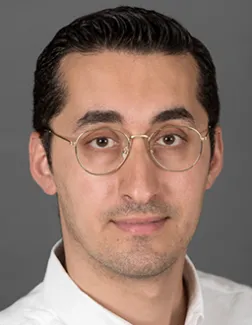
Aram Ghalali
PhD
Instructor of Surgery, Boston Children’s Hospital
Faculty, Harvard Medical School
Dr. Aram Ghalali is a biomedical researcher dedicated to improving the diagnosis and treatment of serious brain and vascular diseases, with a special focus on children. His research aims to develop non-invasive biomarkers (tests that can be done using blood or other body fluids) and new, targeted treatments for pediatric brain tumors and complex cerebrovascular conditions. These include diseases such as moyamoya disease, brain aneurysms, arteriovenous malformations, and cavernous malformations—conditions that can be difficult to diagnose and treat effectively.
A central goal of Dr. Ghalali’s work is to help doctors make earlier diagnoses, choose more effective treatments, and better predict how a disease may progress. By understanding the underlying biology of these conditions, his research strives to improve both survival and quality of life for patients and their families.
Cancer Research and New Treatment Strategies
Dr. Ghalali has devoted his career to cancer research and has extensive experience studying aggressive and advanced cancers, including prostate, lung, and liver cancer, as well as childhood brain tumors such as medulloblastoma, diffuse midline glioma, and glioblastoma. His current research focuses on understanding the biological and metabolic changes that cause cancers to develop, grow, and become resistant to treatment.
At the same time, his laboratory works to identify weak points in cancer cells that can be targeted with new drugs. Several promising treatment compounds discovered through this research are now being tested in preclinical studies, an important step toward future clinical use.
Developing New Drugs Through Translational Research
An important part of Dr. Ghalali’s research focuses on translational science, which means turning discoveries made in the laboratory into potential treatments for patients. One major effort involves developing new therapies for prostate cancer. This work builds on the discovery that a protein called Antizyme Inhibitor 1 (AZIN1) helps cancer cells grow by blocking the action of the body’s natural tumor-suppressing mechanisms. Dr. Ghalali is developing advanced laboratory tests that allow thousands of drug candidates to be screened efficiently, with the goal of identifying compounds that can block AZIN1, restore tumor suppression, and slow cancer growth.
In parallel, Dr. Ghalali’s team is working to develop new treatment strategies for aggressive pediatric brain tumors, including diffuse midline glioma (DMG). His laboratory has recently identified a previously unknown receptor that plays a critical role in DMG tumor invasiveness—the ability of cancer cells to spread into surrounding brain tissue. Building on this discovery, the team is actively searching for highly selective inhibitors that can block this receptor and limit tumor spread. This approach represents a promising new therapeutic direction for a disease that currently has very limited treatment options.
Several of the discoveries arising from these translational research efforts have strong potential for clinical application, and multiple patent applications are currently under development to protect these innovations and support their future translation into patient therapies.
Improving Care for Children with Medulloblastoma
Dr. Ghalali also leads research projects aimed at improving treatment for medulloblastoma, the most common malignant brain tumor in children. These projects are supported by organizations including the Swedish Childhood Cancer Fund, the Sweden–America Foundation, and the Dubai–Harvard Foundation for Medical Research.
Medulloblastoma is not a single disease but includes several subtypes that respond differently to treatment. Dr. Ghalali’s team has discovered that levels of AZIN1 are dramatically increased in medulloblastoma tumors. This finding suggests that AZIN1 plays an important role in how these tumors grow and respond to therapy.
The research aims to identify proteins that can serve as biomarkers—biological signals that help predict how aggressive a tumor is, how it may respond to treatment, and whether it is likely to come back. This information could allow doctors to better tailor treatment plans, helping some children avoid unnecessary side effects while ensuring that others receive more intensive therapy when needed.
Environmental Health Research
In addition to his work on cancer and brain disease, Dr. Ghalali is deeply interested in environmental health. At Karolinska Institutet, he leads a large, collaborative research effort to study traces of environmental pollutants and their potential effects on human health. This research seeks to better understand how long-term exposure to environmental factors may contribute to disease risk, particularly in vulnerable populations.
Dr. Aram Ghalali holds a Bachelor of Science in Chemical Engineering as well as a Bachelor of Science in Biotechnology. He has also earned multiple Master of Science degrees, including one in Quality Assessment in Pharmaceutical Sciences/Biotechnology and another in Cancer Prevention and Pharmacy Design. In addition, Dr. Ghalali holds a degree in Civil Engineering from Mälardalen (méé-lar daal-ens) University (Sweden).
He completed his Ph.D. in the field of medicine at the Karolinska Institutet (Sweden), where his research focused on cellular signaling pathways. He subsequently obtained his first postdoctoral research fellowship at Karolinska Institutet in the field of toxicology, investigating the role of environmental pollutants in occupational health. Dr. Ghalali then completed a second postdoctoral fellowship at Boston Children’s Hospital, Harvard Medical School, where he is part of the Vascular Biology Program within the Department of Surgery.
His research at Harvard focuses on oncometabolites and drug development targeting late-stage and aggressive (metastatic) cancers. Currently, Dr. Ghalali holds multiple affiliations: he serves as faculty at Harvard Medical School, as an Instructor in Surgery at Boston Children’s Hospital, and as an Assistant Professor affiliated with the Karolinska Institutet.