The Manton Center for Orphan Disease Research at Boston Children's Hospital was created to develop new methods for understanding, diagnosing, and treating rare genetic conditions and to apply this knowledge to make fundamental scientific advances with broad implications for human health.

Manton Center Featured News

Headshot of Catherine Brownstein, PhD

Leveraging AI in rare disease research

As published in NEJM AI: A collaborative team from the Manton Center, Harvard University, and OpenAI has shown how artificial intelligence can support the diagnosis of rare genetic diseases. By reanalyzing 376 previously unsolved pediatric cases, Catherine Brownstein, PhD, and fellow researchers used OpenAI's reasoning models to generate diagnostic hypotheses that were reviewed by clinical experts. This approach contributed to 18 rare disease diagnoses that had previously gone unrecognized, demonstrating the potential for AI to complement genomic medicine by identifying overlooked gene–disease relationships and accelerating diagnoses for patients with complex genetic conditions. View the complete NEJM AI article.

View the links below to learn more:

Please click the additional links below to find out more:

Logo: Astellas Gene Therapies

X-linked Myotubular Myopathy VALOR Clinical Trial: First patient dosed

Astellas Pharmaceuticals has announced the dosing of the first participant in the Phase 1/2 VALOR clinical trial evaluating ASP2957, a next-generation gene therapy for X-linked myotubular myopathy (XLMTM), a rare neuromuscular disease. The therapy builds on pioneering work from the Beggs Laboratory and employs a redesigned AAV vector developed in collaboration with the Broad Institute and Kate Therapeutics. ASP2957 has been engineered with the goal of improving the safety and effectiveness of MTM1 gene delivery while addressing the severe muscle weakness and respiratory impairment characteristics of XLMTM.

Click the links to read more:

New England Premier: UNDIAGNOSED screening and panel discussion

As a part of Undiagnosed Diseases Network and Harvard Rare Disease Month events, please join our community for a screening of UNDIAGNOSED at Longwood on Thursday, Feb. 12, 2026, from 5:30 to 8 p.m. Eastern time. Registration required and space is limited, please register for the screening here.

John Christodoulou, MMBS, PhD, joins our monthly rare disease seminar

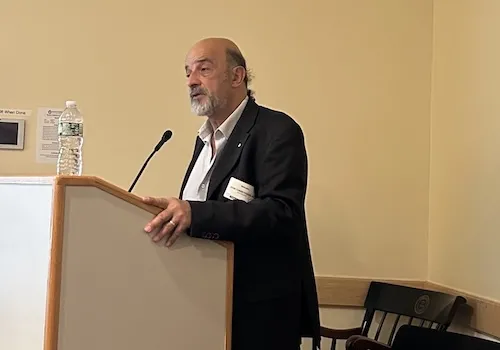
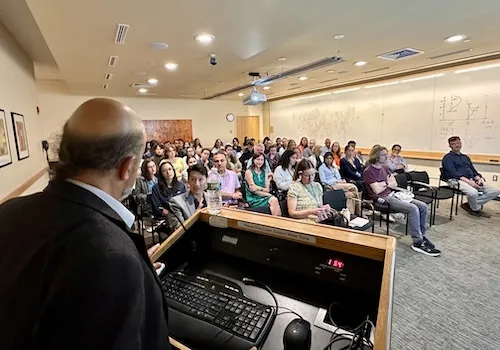
This month, the Manton Center hosted John Christodoulou, MMBS, PhD for our rare disease seminar. Dr. Christodoulou has formal qualifications in pediatrics, medical genetics, and genetic pathology, with a main clinical focus toward the diagnosis and management of children with inborn errors of metabolism. He has been based at the Murdoch Children’s Research Institute (MCRI) in Melbourne, Australia, since 2016 and is currently the MCRI's Director of the Genomic Medicine Theme. Dr. Christodoulou has published more than 400 peer-reviewed papers and has an active laboratory-based research program, with a particular focus on mitochondrial disorders and the application of “multi-omic” technologies for rare disease gene discovery." 

John Christodoulou speaking
John Christodoulou speaking to a room of over fifty people sitting in chairs

Dr. Monica Wojcik and Dr. Anne O'Donnell-LuriaGenome sequencing for rare disease diagnosis
We are so excited to share this work published by Dr. Monica Wojcik, Medical Director of the Manton Center (first author); and Dr. Anne O’Donnell-Luria, Manton Center Associate (senior author).

In this study of 744 families from across the Broad Center for Mendelian Genomics/GREGoR consortium cohort, including cases from the Manton Center and Beggs lab, 29% of cases received a diagnosis by genome sequencing, usually following prior negative exome sequencing. On careful review, 18% of diagnosed families would have been diagnosed by exome reanalysis and 3% by additional methods of copy number variant calling or mitochondrial variant evaluation on prior exome data. The remaining 8% required genome sequencing to identify small or copy-neutral structural variants; coding sequence variants in area of poor coverage; indels; noncoding variants; or tandem repeat expansions.

This work highlights the benefits of pursuing genome sequencing after negative exome sequencing and analysis. Given the falling costs of sequencing and improved analysis available with genome sequencing, the study team proposes that the time has come for a genome sequencing first approach.

Read more about this study and findings in the New England Journal of Medicine.

Check out our News and News Archive pages for more great stories!


About The Manton Center

Founded in 2008, the Manton Center was one of the first centers in the world solely devoted to the study of rare diseases. The Manton Center hopes to increase scientific knowledge about rare diseases through supporting patient-focused research, building collaborations within the rare disease community, and funding existing research efforts focused on rare diseases. Through the various research projects, funding and awards, and outreach efforts, The Manton Center facilitates the discovery and development of more effective diagnostic pathways and therapies for rare or unknown conditions.  

Boston Children's Hospital joined in a partnership with The Manton Foundation to create a center devoted to understanding "orphan diseases" - genetic syndromes, immune system problems, errors of metabolism, neuromuscular disorders and other little-noticed but scientifically important disease processes. In our center, experts committed to answering critical questions posed by puzzling and difficult diseases can collaborate, multiplying the impact of key medical discoveries and helping children and families facing profound medical challenges.

A rare, or “orphan” disease is defined as a disease or disorder that affects less than 200,000 people in the United States at any given time. However, the word rare seems somewhat unfitting when we realize that 30 million people in the U.S. are affected by a rare disease. While many people live with these rare or unknown conditions, a lack of scientific knowledge about their underlying causes can often lead patients through a journey complicated by misdiagnosis, poor treatment options, and lack of funding for research and advocacy.

The Manton Center Goals

The Manton Center is a virtual center for clinicians and scientists at Boston Children's Hospital who share a common vision of helping families by improving our understanding and awareness for rare diseases. The goals of this collaboration are to:

  • Unlock the mysteries of orphan diseases in order to develop better diagnostic tests and design new treatments and cures.
  • Discover fundamental biological principles that have broad applications and can lead to advances in our understanding of common diseases such as cancer, heart disease, diabetes, and other major health problems.
  • Train a new generation of investigators who will infuse creative energy into the battle against orphan diseases.
  • Disseminate The Manton Center's findings among lay and medical/scientific communities locally, nationally, and globally to enhance interest and support for orphan disease research and care.

Contact Us

617-730-0253